How to Automate Your Marketing with the 14 Agents of Agent Kit

How do you completely automate your marketing? To fully automate your marketing in 2026, you must replace single-prompt AI interactions with a multi-agent framework. By utilizing tools like Agent Kit, you can deploy a specialized team (such as a Planner Agent, a Copywriter Agent, and an SEO Reviewer Agent) that automatically passes data down an assembly line, ensuring high-quality, brand-consistent output without constant human supervision.
If you are a Solopreneur, you probably feel overwhelmed by the sheer volume of content required to stay relevant. You try to use AI to speed things up, but writing prompts all day is exhausting, and the output often sounds robotic.
The solution to this problem is understanding the Agent Handoff methodology.
Why Single-Prompt Marketing Fails
When you open ChatGPT and type, “Write a 1000-word blog post about affiliate marketing,” you are relying on a single AI entity to act as a researcher, a strategist, a copywriter, and an editor all at once.
This is a structural flaw. In a real marketing agency, one person does not do all of these jobs.
- The SEO Strategist finds the keywords.
- The Copywriter writes the draft.
- The Editor reviews the brand voice.
If you want enterprise-grade results, your AI must operate the same way.
Understanding the 14 Agents Framework
Agent Kit (formerly Claude Kit) introduces a framework where you do not just chat with an AI; you manage a team of up to 14 specialized agents.
What is Agent Handoff?
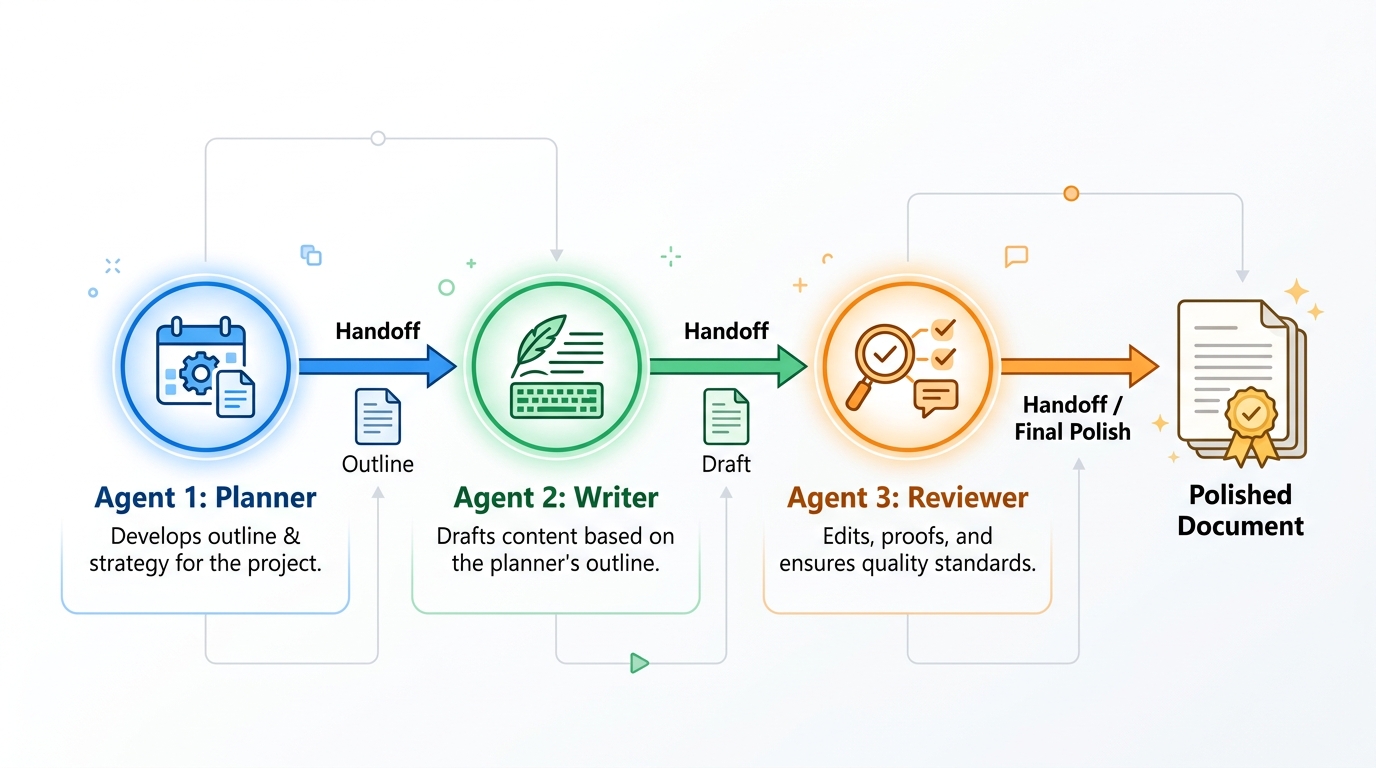
Agent Handoff is the process where one AI agent finishes its specific task and passes its structured output directly to the next agent in the pipeline.
For example, your workflow might look like this:
- The Research Agent scans the internet for top-ranking articles and creates an outline.
- Handoff: It sends this outline to the Drafting Agent.
- The Drafting Agent expands the outline into a full article, strictly following your brand’s tone of voice guidelines.
- Handoff: It sends the draft to the SEO Reviewer Agent.
- The SEO Reviewer Agent checks if the keyword density is correct and formatting rules (like Question-led headings) are applied.
Because each agent only has one job, the hallucination rate drops to near zero, and the quality skyrockets.
How to Set Up Your First Agent Pipeline
You don’t need to deploy all 14 agents on day one. Start small to build your confidence in the framework.
- Map Your Process: Document the exact steps you take to write an article manually. Break it down into 3 distinct roles (e.g., Planner, Writer, Editor).
- Deploy the Framework: Create an account on an agentic platform like Agent Kit.
- Define the Rules: For each agent, write a strict set of rules (a Skill) that defines what good output looks like.
- Publish to Your Hub: Once the Editor Agent approves the final draft, automatically push it to your unified data layer (like Systeme.io) to capture leads.
If you want to see a deeper, step-by-step technical breakdown of how we orchestrate these handoffs, read our comprehensive Agent Kit for Marketing Playbook.
This article is a “Spoke” in our AI Automation series. By implementing these agentic workflows, you can effectively build a 1-Person Empire without burning out.
Disclaimer: This post contains affiliate links. If you purchase through these links, we may earn a commission at no extra cost to you. This is how we fund our 1-Person Empire.